
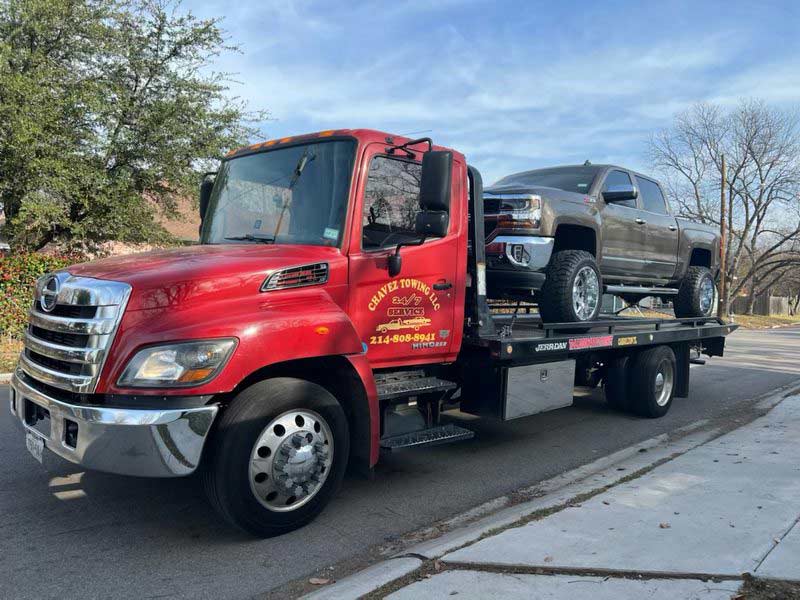
Understanding towing at max capacity keeps Carrollton drivers and their vehicles safe when a professional tow is required. Overloading a truck or trailer past its rated limits creates handling problems, brake fade, and sudden equipment failure on local roads such as Hebron Parkway or Old Denton Road. Chavez Towing dispatches drivers who know how to match the right equipment to each job so the load stays within safe limits from pickup to drop-off.
Carrollton homeowners often need help moving boats, work trailers, or disabled trucks that sit at or near the upper end of what a standard pickup can handle. Knowing the difference between advertised towing numbers and real-world safe limits prevents roadside surprises. When the vehicle cannot roll on its own or the load exceeds what the owner can manage, a call to a local towing service brings the proper flatbed or wheel-lift truck instead of an undersized option.
Table of contents
- Why staying under max capacity matters in Carrollton
- How to know your truck towing limits
- Practical safety rules for towing at max capacity
- What to tell the dispatcher about weight and size
- Common mistakes that push loads over the limit
- Common questions about towing at max capacity
Why staying under max capacity matters in Carrollton
Carrollton traffic mixes residential streets with heavier commercial corridors. A load that feels stable on a short driveway test can sway or fishtail once it reaches highway speeds on I-35E. Exceeding the truck towing limits also stresses the hitch, frame, and cooling system during the longer hauls that sometimes occur when a vehicle must travel to a shop outside the immediate area. Professional towing services use trucks rated for the actual weight and choose routes that avoid steep grades or tight turns when the load sits near the upper limit.
Local drivers who attempt to move an overloaded trailer themselves risk citations and insurance complications after an incident. A service that follows max towing capacity guidelines reduces those risks by sending the correct equipment the first time. When a call comes in for a heavy truck or RV, dispatch confirms the vehicle weight and selects the appropriate rig so the job stays within safe operating ranges.
How to know your truck towing limits
Every truck has a manufacturer sticker that lists gross combined weight rating and maximum tongue weight. Subtract the weight of passengers, fuel, and any added accessories to arrive at the true remaining capacity. Many Carrollton owners keep this information on the door jamb or in the glove box so it is ready when they need to describe the load to a towing company. If the sticker is missing, the vehicle identification number can be used to look up the original specifications before the call is placed.
Trailers and boats add their own numbers. Weigh the loaded trailer at a local scale when possible, then compare that total to the truck towing limits. If the combined weight sits within five percent of the maximum, most services recommend a heavier-duty truck rather than pushing the lighter unit. This step prevents the need for a second dispatch later in the day.
Practical safety rules for towing at max capacity
Keep speed at or below posted limits and add extra following distance. Braking distances increase noticeably when the trailer is near its rated maximum. Use lower gears on any incline and watch transmission temperature gauges if the route includes hills. Secure all tie-downs and check them again after the first few miles. A professional driver performs these checks as standard procedure on every call involving towing at max capacity.
Distribute weight evenly so the tongue weight stays within the recommended range, usually ten to fifteen percent of the total trailer weight. Uneven loads cause sway that is difficult to correct once the vehicle is moving. If the load includes multiple items, place heavier pieces forward and secure them so nothing shifts during transit. These steps keep the combination stable on Carrollton streets and during longer moves to nearby cities.
Never add extra passengers or cargo to the towing vehicle once the trailer is attached. The added weight reduces the remaining towing margin and can push the setup past safe limits without anyone noticing until handling changes. Professional services plan the load configuration before the truck leaves the yard so no last-minute adjustments are required.
What to tell the dispatcher about weight and size
Give the year, make, and model of both the towing vehicle and the item being moved. Include the loaded weight if it is known, along with any special features such as dual rear wheels or extended hitches. Mention the final destination so the team can choose the shortest safe route. When the load sits close to published limits, say so directly so the correct truck is sent instead of a lighter unit that would require a second trip.
Photos of the load and the truck rating sticker help dispatch confirm the right equipment. Clear communication prevents delays and keeps the entire job within the safe towing envelope from the first mile to the last.
Common mistakes that push loads over the limit
Many drivers rely only on the advertised towing number without subtracting passengers or fuel. Others forget to weigh the trailer after it is loaded with gear or water. Some add a second vehicle or extra equipment at the last minute without recalculating the totals. Each of these steps can move the combination from safe to overloaded without obvious warning signs until the truck is already on the road.
Professional towing avoids these issues by asking the right questions before the truck rolls. When a Carrollton resident needs help moving a heavy item, the dispatcher records the details and matches the job to equipment that stays comfortably under the rated limits for that truck.
Common questions about towing at max capacity
What happens if a trailer exceeds the truck towing limits?
The combination can lose stability, overheat the drivetrain, or suffer brake failure. A professional service will decline the job or send a heavier truck rather than risk an unsafe tow.
How do I find the exact max towing capacity for my truck?
Check the door jamb sticker or owner manual for the gross combined weight rating, then subtract the weight of the truck, fuel, and passengers. Local scales can confirm trailer weight when the number is uncertain.
Can a towing company move my load if it sits right at the published maximum?
Many companies will accept loads within a small margin of the rating, but they may recommend a heavier truck for safety on longer routes or when weather conditions change.
Does Carrollton traffic affect towing safety near max capacity?
Yes. Stop-and-go conditions on busy corridors increase heat buildup in the transmission and brakes. Drivers allow extra space and monitor temperatures closely when the load is heavy.
Should I weigh my trailer before calling for a tow?
Weighing ahead of time gives the dispatcher accurate numbers and helps select the right truck on the first call. Many Carrollton residents use public scales near industrial areas for this step.
When your vehicle or trailer sits near its upper limits, rely on experienced local help. Call (214) 731-7327 to speak with Chavez Towing about the safest way to move the load. You can also review our towing services page or learn more on the emergency towing page for additional guidance. For quick reference on nearby options, see our tow truck near me information. Stay safe and let the right equipment handle the job.