
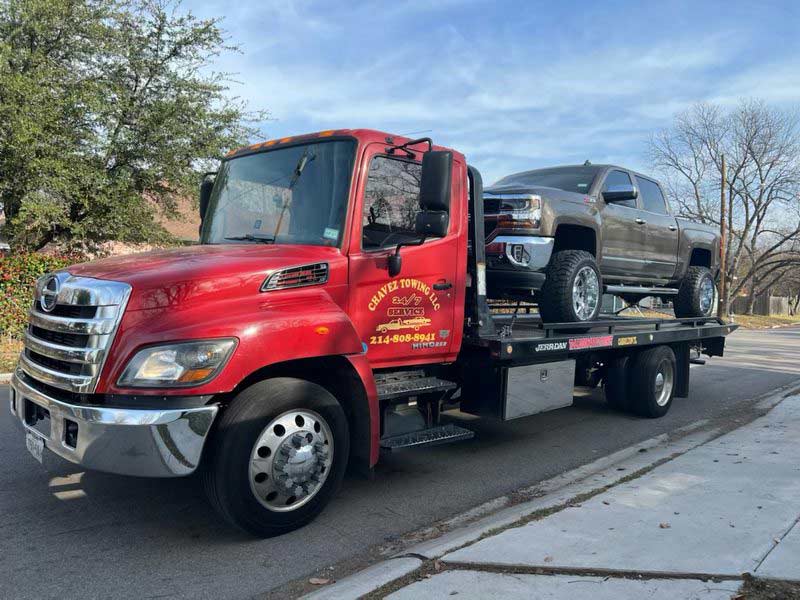
Truck pulling power determines whether a job stays safe or turns into a roadside hazard in Carrollton. Drivers who understand truck pulling power limits before they hook up a trailer or move equipment avoid overloads, brake fade, and long waits for help. Chavez Towing handles calls from Carrollton residents who discover their truck cannot manage the load they planned to move.
Knowing which truck has best towing capacity for the job starts with reading the door sticker or owner’s manual. That number is the maximum the manufacturer tested under ideal conditions. Real-world factors in Carrollton traffic, summer heat, and stop-and-go highways reduce that figure quickly. A half-ton pickup rated for 8,000 pounds may safely pull only 5,000 pounds once a trailer, cargo, passengers, and fuel are added.
Table of contents
- Understanding published truck pulling power limits
- Matching the right truck to the job
- Risks of exceeding truck pulling power
- Signs your truck is struggling
- When to call professional towing instead
- Common questions about truck pulling power
Understanding published truck pulling power limits
Every truck comes with a gross combined weight rating that includes the vehicle, trailer, cargo, and passengers. Subtract the actual weight of your loaded truck from that rating to find remaining capacity. Carrollton drivers often forget to weigh the trailer tongue weight and cargo separately. A utility trailer that looks light can add hundreds of pounds once tools, equipment, or a riding mower are loaded.
Factory ratings assume flat roads, moderate temperatures, and experienced drivers. Carrollton hills, summer pavement heat, and frequent highway merges change the math. If the truck must climb an overpass while towing, reduce the target load by 10 to 15 percent. The same rule applies when the trailer has poor aerodynamics or the truck is older and has higher mileage.
Matching the right truck to the job
Half-ton trucks work well for small enclosed trailers, landscape equipment, or a single vehicle on a car hauler when the total stays well below the published limit. Three-quarter-ton and one-ton trucks handle larger boats, equipment trailers, or multiple vehicles more comfortably. The difference shows up in transmission temperature and brake performance after a few miles on I-35E or the George Bush Turnpike.
Check the hitch receiver rating separately from the truck rating. Some aftermarket hitches lower the safe limit even when the truck itself can handle more. Always verify that the hitch, ball mount, and safety chains are rated for the full load you intend to pull. Carrollton drivers who borrow a truck sometimes overlook these details and end up needing roadside help.
Our heavy truck towing and truck towing service pages explain how dispatch matches equipment to the actual weight and situation.
Risks of exceeding truck pulling power
Overloading causes longer stopping distances, reduced steering response, and higher chances of trailer sway. Transmission fluid can overheat within minutes on a warm Carrollton afternoon, leading to expensive repairs. Brake fade on downhill sections becomes dangerous when the combined weight exceeds the truck’s design. Insurance companies may deny claims if investigators determine the load exceeded published ratings.
Even if the truck moves the load for a short distance, repeated stress shortens component life. Tires on both the truck and trailer wear faster and can fail without warning. Carrollton drivers who regularly exceed limits often discover the problem only after a breakdown leaves the vehicle in a travel lane.
Signs your truck is struggling
Watch the transmission temperature gauge if your truck has one. Rising readings or the appearance of a warning light means the load is too heavy for current conditions. Unusual engine laboring on flat roads, delayed downshifts, or a burning smell from the brakes are other clear signals. If the trailer begins to sway at highway speeds, pull over safely and reduce speed or redistribute weight before continuing.
Carrollton drivers who notice these signs early can often reach a safe location and call for assistance instead of risking further damage. Our emergency towing team responds with the correct equipment for the actual weight involved.
When to call professional towing instead
When the load exceeds the truck’s safe capacity or the driver lacks experience with heavy towing, the best decision is to arrange professional transport. Chavez Towing provides flatbed and heavy-duty wreckers sized for the job. Attempting to move an overloaded trailer with the wrong truck often results in a longer and more expensive recovery.
Drivers who need to move equipment, RVs, or commercial trailers regularly benefit from planning the route and verifying weights ahead of time. When conditions change or the truck shows signs of strain, a quick call prevents a larger problem. See our tow truck near me page for local dispatch options.
Common questions about truck pulling power
How do I find my truck’s exact towing capacity?
Locate the tire placard on the driver’s door jamb or consult the owner’s manual for the gross combined weight rating. Subtract the weight of the loaded truck, passengers, and fuel to determine remaining capacity for the trailer and cargo.
Does weather in Carrollton affect truck pulling power?
Yes. High temperatures increase transmission and brake stress. Strong crosswinds on open stretches of highway can also reduce stability when the trailer is near the upper limit.
Can I increase capacity with aftermarket parts?
Aftermarket hitches, coolers, and upgraded brakes can improve safety margins but do not change the manufacturer’s published rating. Exceeding that rating still carries the same risks.
What should I do if my truck overheats while towing?
Pull over safely, turn on hazard lights, and allow the engine and transmission to cool before attempting to move again. Call for professional help if the temperature does not return to normal within a few minutes.
Who should I contact for overloaded trailer recovery in Carrollton?
Chavez Towing provides the correct equipment for the actual weight. Call (214) 731-7327 or visit our contact page to arrange dispatch.
Understanding truck pulling power before you leave the driveway keeps Carrollton drivers and their equipment safe. When the load exceeds safe limits or the truck shows signs of strain, professional towing prevents further damage and long delays. Call (214) 731-7327 for fast, fair help when you need it.