
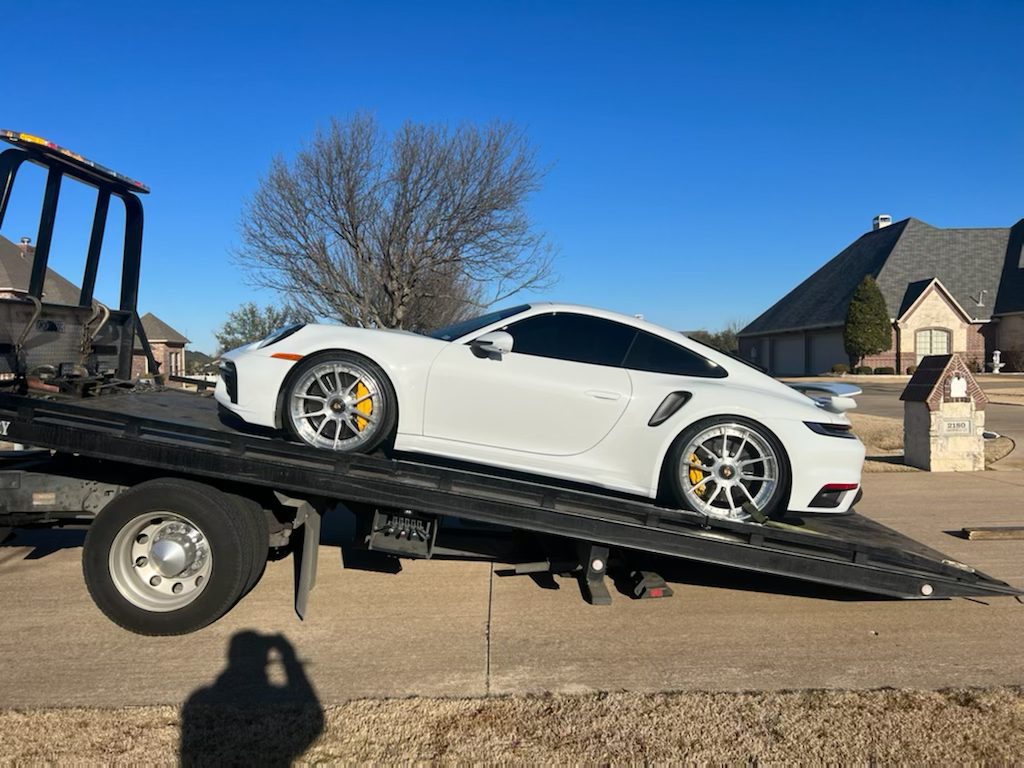
Towing can look simple, but a lot is going on behind the scenes. If you tow a trailer, camper, or RV, you need to know your limits. A straightforward rule helps drivers stay safe on the road. What is the 80% towing rule? It is a good rule of thumb that helps protect your vehicle and everyone around you.
At Chavez Towing, we help drivers in Carrollton, Texas, understand safe towing every day. Whether you tow for work or travel, knowing this rule can help prevent damage, breakdowns, and unsafe driving situations.
What is the 80% Towing Rule?
The 80% towing rule is a simple rule that says you should not tow more than 80% of your vehicle’s towing capacity. This creates a safety margin between what your vehicle is rated to tow and what it actually pulls.
For example, if your truck has a max towing capacity of 10,000 pounds, the rule for towing says you should keep the trailer weight at or below 8,000 pounds. This extra room helps your tow vehicle perform better and handle stress more safely.
This rule comes from real-world driving, not just lab tests. It helps account for hills, heat, wind, cargo, and wear and tear.
Why the 80% Rule Is a Good Rule of Thumb
Truck manufacturers publish towing numbers based on testing standards like SAE J2807. These tests are done in controlled settings. Real roads are different.
Following the 80 percent rule helps with:
- Better braking control
- Less strain on the engine and transmission
- Reduced sway when towing a travel trailer
- Lower risk of overload
- Improved fuel economy
- Longer life for vehicle components
This rule makes towing safer, especially for RV towing, campers, and long-distance towing.
Understanding Tow Capacity and Weight Ratings
Before towing, you need to understand a few key weight terms. These numbers are found in your owner’s manual or on the driver-side door sticker.
Important weight ratings to know
- Tow capacity: The maximum weight your vehicle can pull
- GVWR (gross vehicle weight rating): The maximum weight of your car with passengers and cargo
- GCWR (gross combined weight rating): The total weight of the car and trailer combined
- Payload: How much weight your truck can carry
- Tongue weight: The weight placed on the hitch by the trailer
- Axle weight rating: The maximum weight each axle can handle
The capacity of your tow vehicle is not just about pulling power. Payload capacities, rear axle limits, and brake strength all matter.
How to Check the Towing Capacity of Your Vehicle
To find the towing capacity, check these sources:
- Owner’s manual
- Vehicle manufacturer website
- Sticker inside the driver’s door
- Published towing guides
Look for the vehicle’s towing capacity, not just the max tow number in ads. Also, check if your car has a towing package, as this can change ratings.
Why Towing at Max Capacity Is Risky
Towing at the maximum towing limit leaves no margin of error. Even small changes can push you over the edge.
Things that add weight fast include:
- Passengers
- Cargo in the truck bed
- Tools and supplies
- Full water tanks in an RV
- Extra fuel
- Hitch equipment
When you exceed 80 percent, you risk sway, brake failure, axle stress, and poor towing performance. Roadside failures or costly repairs may result over time.
How the 80% Rule Helps With RV and Trailer Towing
RV towing and travel trailer towing put constant strain on your tow vehicle. Wind, passing trucks, and uneven roads increase stress.
Using the 80 percent towing rule helps:
- Keep the truck and trailer balanced
- Improve weight distribution
- Reduce sway
- Protect the hitch and rear axle
- Keep the gross combined weight in check
This rule is especially helpful for homeowners pulling campers or box trailers for trips or moves.
Does the 80% Rule Apply to All Vehicles?
Yes, this rule applies to cars, trucks, and SUVs rated to tow. It is not a legal requirement, but it is a recommended towing practice used by experienced drivers and safety experts.
Heavy-duty towing vehicles may handle more, but even then, staying under 80 percent helps avoid overload and improves control.
What Happens If You Tow More Than 80 Percent?
If you tow more than 80 percent, you may notice:
- Slower braking
- Poor handling
- Increased sway
- Higher fuel use
- Faster wear on tires and brakes
In extreme cases, towing beyond safe limits can cause loss of control or mechanical failure.
When to Call a Professional Towing Company
If your vehicle cannot safely tow the trailer, or if you are unsure of the total weight, it is safer to call a professional.
Chavez Towing provides reliable towing services for drivers who need help with heavy loads or emergencies. We handle:
- Car towing
- Box truck towing
- RV towing
- Truck towing
- Flatbed tow truck service
- Heavy truck towing
- Motorcycle transport
- Emergency car recovery
FAQs About the 80% Towing Rule
Does the law require the 80% towing rule?
No, it is not a law. It is a safety-based rule of thumb used to help drivers tow safely.
Does the rule include cargo inside the vehicle?
Yes. Payload, passengers, and cargo all count toward the total weight and affect towing capability.
Is tongue weight part of the towing limit?
Yes. Tongue weight affects payload and axle weight rating, which impacts safe towing.
Does SAE J2807 support the 80% rule?
SAE J2807 sets testing standards, but the 80 percent rule adds a real-world safety margin.
Can I tow at 100 percent if my vehicle is rated for it?
You can, but it increases risk. Most experts recommend staying under 80 percent for safer towing.
Final Thoughts
Understanding what is the 80% towing rule helps protect your vehicle, your cargo, and your safety. It is a simple way to avoid overload, improve control, and reduce stress on your tow vehicle and trailer.
If you need help with towing or recovery, contact us at Chavez Towing. We are here for drivers in Carrollton, Texas. Call (214) 731-7327 for car towing, RV towing, truck towing, long-distance towing, or emergency roadside help. Let our team handle the heavy work so you can stay safe on the road.
Also Read:
Can Towing a Car Damage the Transmission? What Every Driver Needs to Know
Flatbed Car Towing Texas: Why is TX Flatbed Towing Service the Best Way to Tow?
Best Heavy Duty Towing Service for Medium and Large Vehicles