
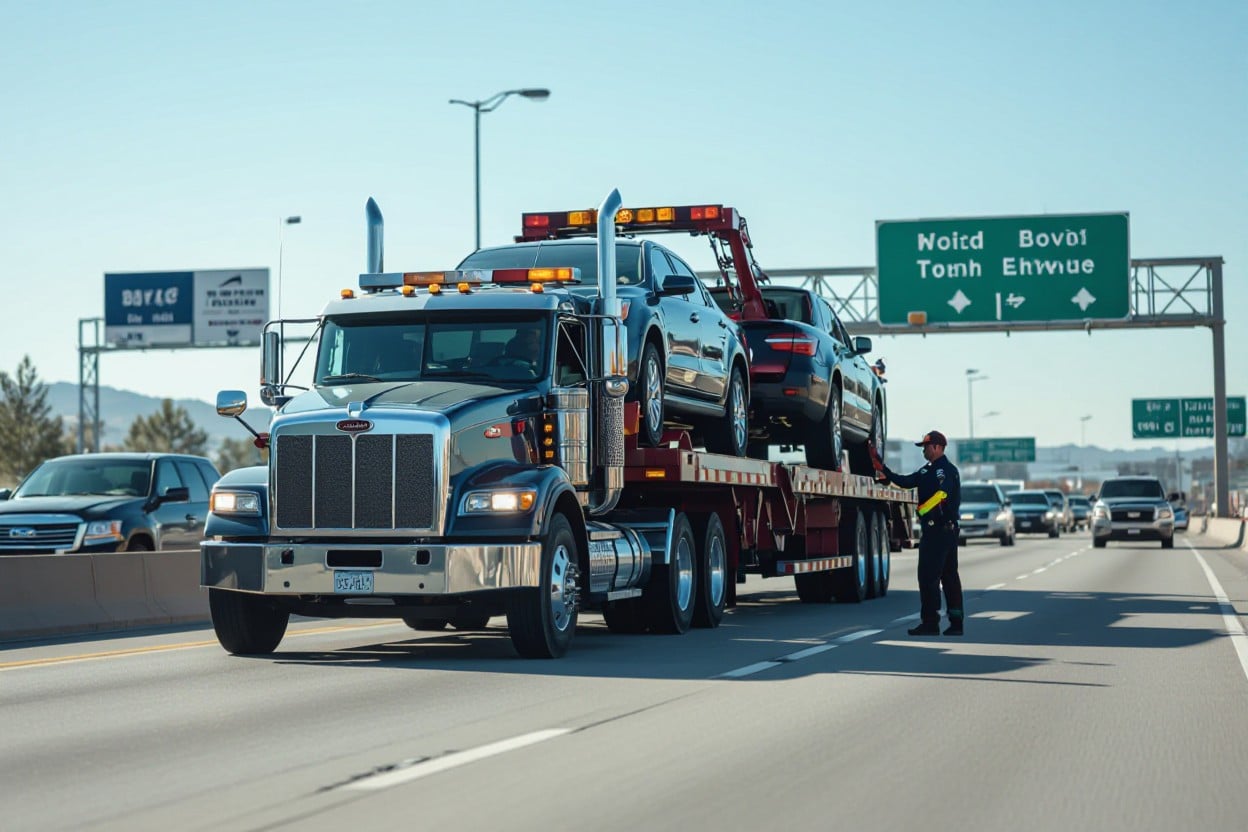
You can save hours by hiring a heavy duty towing company that offers quick roadside diagnostics, coordinated commercial vehicle recovery, and on-site repairs to get your rig moving. At Chavez Towing, our teams handle scene management, obtain permits, perform heavy winching, and expedite hauling, so you avoid long waits and administrative delays. Choosing an experienced heavy-duty tow provider like us streamlines paperwork, insurance claims, and logistics, reducing downtime and protecting your delivery schedule.
The Time Sink of Vehicle Breakdowns
You lose hours beyond the mechanical failure itself: searching for a heavy duty towing company, coordinating with dispatch, and waiting for commercial vehicle recovery can turn a 30-minute incident into a 4–6 hour operational shutdown. Urban calls often receive 30–90 minute responses, while rural recoveries commonly take 2–4 hours. Add reloading, customer rescheduling, and paperwork, and a single breakdown can erase an entire shift and disrupt multiple deliveries.
The Hidden Costs of Downtime
Every idle hour impacts your bottom line: carriers typically estimate $150–$600 in lost revenue per truck hour from missed loads, detention, and driver wages. Recovery expenses—rotator lifts, winching, flatbed transfers—range $500–$2,000, depending on complexity, and multiple-vehicle incidents multiply those costs rapidly. Using a specialized, heavy-duty towing company with planned routing and equipment reduces unexpected line-item expenses and shortens costly downtime.
The Emotional Stress of Being Stranded
Being stranded elevates stress and forces difficult choices: you must juggle customer expectations, perishable freight timelines, and Hours-of-Service limits that can result in reduced driving hours or lead to violations. Typing “big rig towing near me” at midnight on a rural stretch adds anxiety and can lead you to rush decisions that increase risk or fines. Clear, timely communication from a commercial vehicle recovery team directly reduces that pressure.
Specialized recovery crews also provide practical relief that lowers stress: you receive ETA updates, driver assistance, and options like temporary transloads to protect delivery windows. For example, a rotator-equipped team can often recover a jackknifed tractor-trailer in 1–3 hours versus 6–10 hours with generic equipment, preserving driver pay and HOS compliance. Choosing a local heavy duty towing company with 24/7 dispatch measurably shortens downtime. It eases the strain on you and your drivers.
How Expert Equipment Makes a Difference
Specialized Tow Trucks: More Than Just Strength
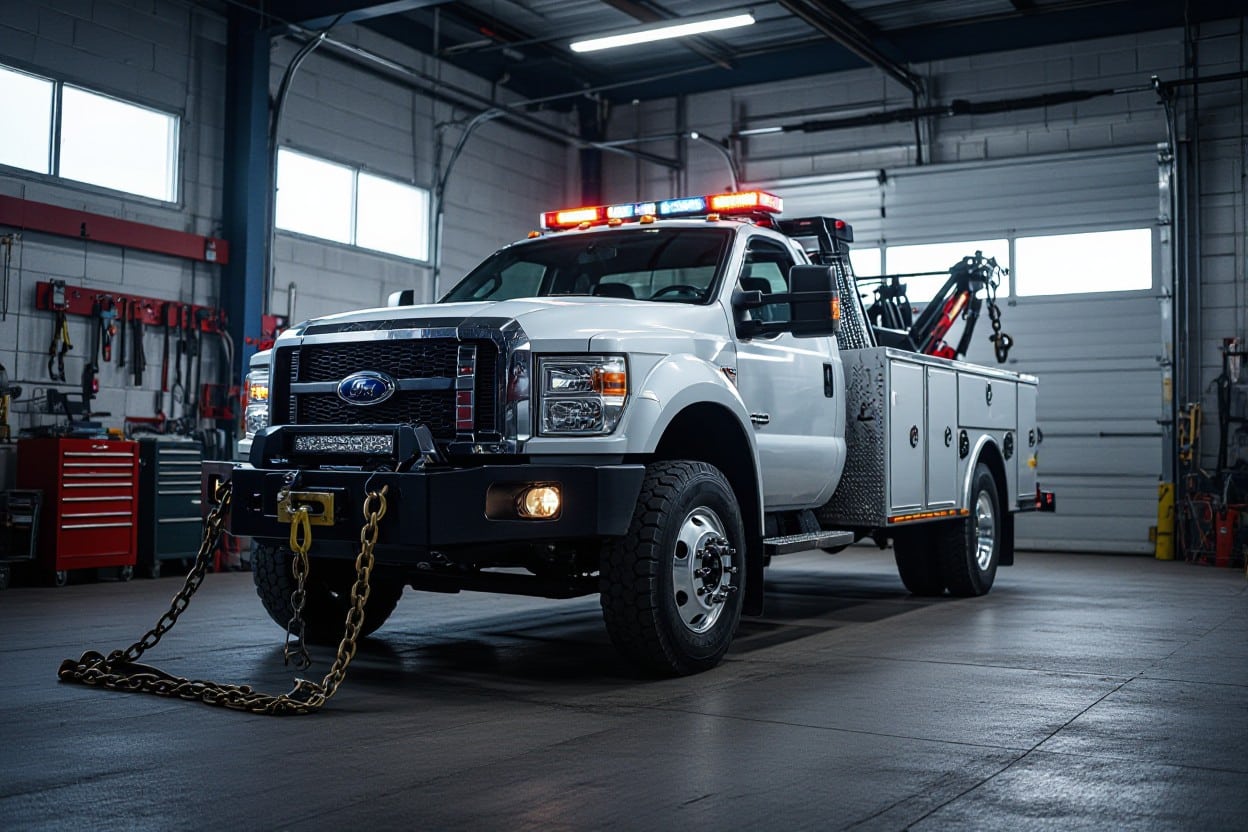
You rely on rotators, integrated wreckers, and heavy-duty wheel lifts to handle overturned tractors and loaded trailers; rotators commonly provide up to 75 tons of boom capacity while integrated wreckers deliver faster straight-line recovery with winches rated 30–60 tons. Your chosen heavy duty towing company uses these rigs to stabilize loads, reduce rigging time, and avoid secondary damage when you search for big rig towing near me.
- Rotators: 360° boom for complex recoveries
- Integrated wreckers: faster single-unit clearances
- Wheel lifts & trailers: safe transport of disabled units
- Winch systems: multi-line capability for heavy loads
Specialized Truck Capabilities
| Equipment | Benefit / Typical Capacity |
|---|---|
| Rotator | Stabilizes and rights overturned rigs — up to ~75 tons |
| Integrated wrecker | Faster clearance for tractor-trailers — 30–60 ton winch |
| Wheel-lift + trailer | Safe short-haul transport and axle protection |
Advanced Technology for Rapid Response
You get faster arrival and safer recoveries through GPS dispatch, telematics, and load-monitoring sensors that feed real-time data to your dispatchers; GPS routing can cut travel time by roughly 10–20% in urban congestion, and telematics let your heavy duty towing company pre-stage the correct rig and equipment before you call “on-scene.” This matters whether you need commercial vehicle recovery or are searching for big rig towing near me.
- GPS-optimized routing to reduce ETA
- Telematics for rig selection and pre-checks
- Load sensors and remote winch telemetry for safety
Technology Features & Impact
| Feature | Operational Impact |
|---|---|
| GPS dispatch | Faster assignment and reduced travel time |
| Telematics | Ensures correct rig selection and predictive maintenance |
| Winch/load sensors | Improves safety margins and reduces rework |
Field teams use mobile apps to attach photos, weight estimates, and hazard notes before arrival, letting your dispatcher assign the nearest rotator or integrated wrecker and route around closures; fleets that adopt these workflows commonly report shorter scene times and fewer call-backs, so when you search for commercial vehicle recovery or big rig towing near me you benefit from speed plus reduced downtime.
- Mobile job packets with photos and weight estimates
- Automatic nearest-unit assignment based on capability
- Traffic-aware routing and ETA updates to you
Dispatch Workflow Breakdown
| Step | Data / Result |
|---|---|
| Initial report | Photo + vehicle type → suggested rig |
| Assignment | Nearest capable unit dispatched with ETA |
| On-scene telemetry | Real-time load data reduces adjustments |
The Role of Trained Professionals in Efficiency
Your response time improves when a heavy duty towing company sends crews trained for commercial vehicle recovery and big rig incidents; experienced teams routinely cut clearance times by 30–60 minutes. You benefit from standardized checklists, GPS-dispatched rotators, and technicians who read weight charts and rigging angles on the fly. When you search for “big rig towing near me,” a certified crew arrives ready with rated winches, cranes and traffic-control plans so your downtime for a disabled semi is minimized and managed safely.
The Training and Certification of Heavy Duty Tow Operators
Your operator typically completes 40–120 hours of classroom and hands-on training, as well as certifications from organizations such as WreckMaster and the Towing & Recovery Association, in addition to completing DOT and OSHA safety modules. Technical skills include calculating GVWR and safe working loads, selecting proper slings, understanding winch-line physics, and utilizing load charts. That competence means your commercial vehicle recovery is performed with predictable timelines and lower risk of secondary damage to cargo or chassis.
Real-Time Problem Solving on the Road
When you face a jackknife, rollover, or blocked interstate, your crew makes rapid assessments—terrain, weight, traffic, and weather—and implements staged recovery plans within 10–30 minutes to prevent escalation. Teams use real-time telemetry, camera feeds, and radio coordination with police and DOT to choose between winching, crane rotation, or staged towing. That decisiveness limits lane closures and keeps your delivery windows from slipping further.
Examples illustrate how this process works: a rotator-rated crew will deploy a 75–125 ton crane for a loaded tanker, rig 2:1 pull lines with 40,000–80,000 lb winches, and set outrigger load pads to protect the pavement—all while liaising with incident command. You receive coordinated hazmat staging, traffic control, and tow sequencing that transforms a potential multi-hour shutdown into a managed operation, often completed in under two hours in many cases.
Predictive Maintenance and Preventive Strategies for Your Heavy Duty Towing Company
How Towing Companies Assess Vehicle Health
Your fleet utilizes telematics, engine fault-code readers, and scheduled physical inspections to identify problems before they strand you. Telematics flags RPM spikes, coolant temperatures, and PTO hours, while technicians measure brake thickness, tire tread, and drivetrain vibration. As a heavy duty towing company, you set inspection triggers by mileage or engine-hours (for example, every 10,000 miles or 250 engine-hours) so you can dispatch repairs proactively and reduce emergency commercial vehicle recovery calls when customers search “big rig towing near me.”
The Long-Term Benefits of Regular Maintenance Check-Ups
Regular check-ups reduce unexpected downtime and roadside assists—many fleets report 20–40% fewer breakdowns—while lowering repair costs by detecting wear early. This approach preserves resale value, extends engine and transmission life, and reduces labor and tow-out costs. Preventative service also improves fuel economy: maintaining proper tire pressure and alignment typically recovers 2–5% in MPG, translating to meaningful savings across a fleet that averages 100,000 miles per year.
Deeper savings come from fewer out-of-service hours and predictable budgeting. Planned maintenance reduces overtime and emergency towing expenses, allowing you to schedule parts procurement for bulk discounts. In one case study, a 50-truck operator cut roadside incidents by 40% and extended engine overhaul intervals by 15% after instituting monthly inspections, oil-analysis programs, and prioritized repairs based on failure-mode data—measurable wins you can replicate in your operation.
Streamlined Logistics: The Towing Company Advantage
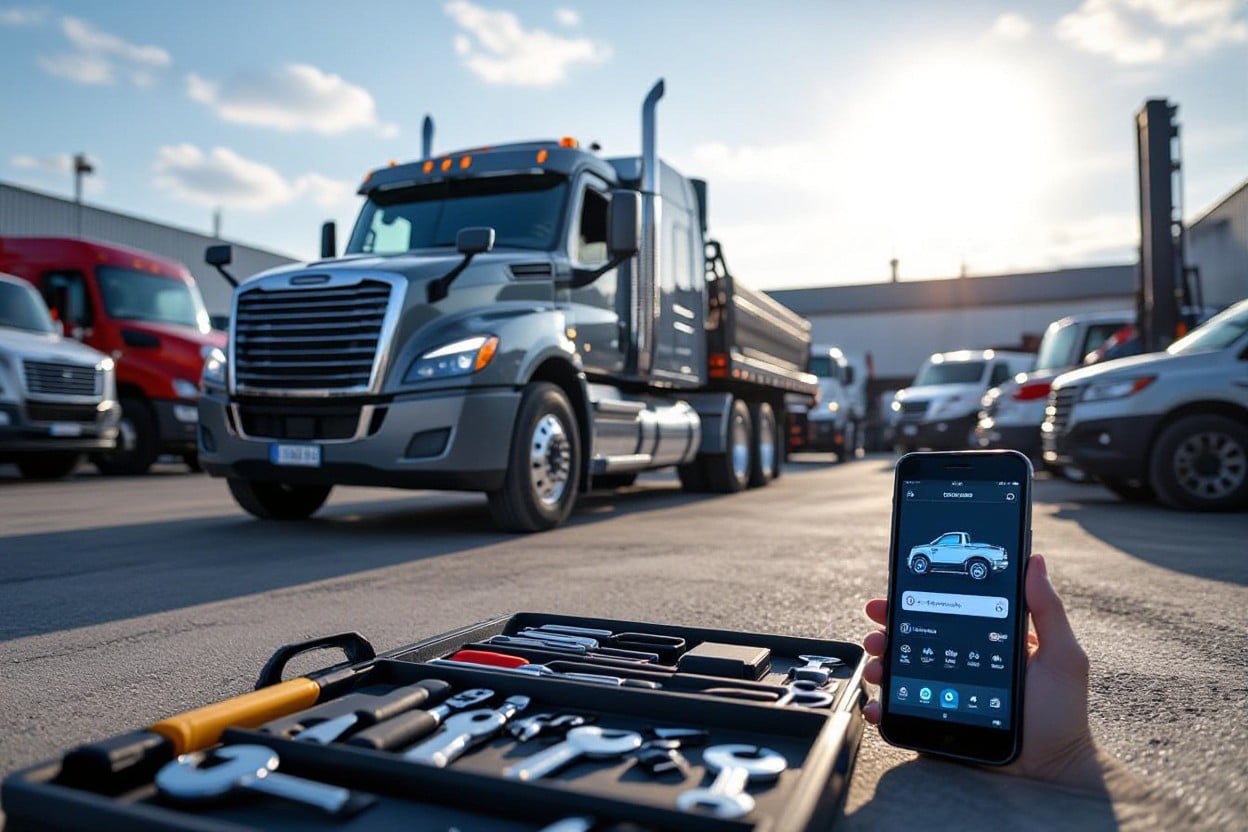
Integrated dispatch and fleet management enable you to reduce idle hours. GPS routing and load matching often shave 20–40% off travel time. In comparison, pre-staged rigs and dedicated recovery crews can shorten on-scene clearance by up to 30%. A heavy duty towing company that uses centralized yards and predictive analytics can turn a 4–6 hour delay into under 90 minutes, saving you operational costs and keeping freight moving on schedule.
Coordinated Response Strategies for Quick Turnaround
Real-time AVL, prioritized queues, and cross-trained teams enable you to move from call to haul faster; for example, one regional operator combined two dispatch centers and reduced the average clearance time from 75 to 45 minutes. You benefit from lane-specific staging, tow-plus-repair handoffs, and black-box diagnostics sharing between carriers and recovery teams, which reduces repeat callouts and accelerates commercial vehicle recovery for big rigs flagged in high-traffic corridors.
Partnering with Local Businesses for Swift Service
Establishing formal ties with diesel shops, local cranes, fueling stations, and DOT units provides immediate access to repair bays and specialty equipment within a 25–50 mile radius, significantly reducing tow-to-repair handoff times to under an hour in many cases. A heavy-duty towing company with vetted vendor networks and preferred-rate agreements helps you avoid long waits and locate big rig towing resources near you quickly when accidents or breakdowns strike.
Negotiate SLAs with local vendors that specify response windows, accepted damage scopes, and invoicing terms so you can measure performance—one carrier’s 2-hour acceptance SLA reduced idle detention by 22%. Co-locate spare parts, share telemetry for faster fault diagnosis, and run quarterly joint drills with partner shops; these steps enable you to rapidly scale commercial vehicle recovery capabilities during peak seasons or multi-incident events.
Final Words
With this in mind, you can reduce hours of downtime by relying on a heavy-duty towing company that combines rapid dispatch, on-site diagnostics, temporary repairs, specialist winches and rotators, and handled paperwork for fleet managers. Chavez Towing’s professional commercial vehicle recovery and big rig towing near you coordinate route clearance and safe load transfers so your drivers get back on schedule faster, saving you valuable time and money.
FAQs
Q: What specific services does a heavy duty towing company offer that shorten roadside delays?
A: A heavy duty towing company provides specialized services beyond standard towing: on-site stabilization, winching, heavy rig straightening, load transfer, flatbed and rotator recovery, mobile minor repairs, and securement of cargo. These capabilities enable crews to clear scenes more quickly by repairing minor faults on-site, safely reloading or transferring freight, and utilizing high-capacity equipment that completes recoveries in fewer lifts. Integrated commercial vehicle recovery teams coordinate traffic control and safety to minimize scene time for big rigs, semis, and construction equipment.
Q: How does rapid response and specialized equipment from a heavy-duty tow service reduce downtime for fleets?
A: Fast dispatch combined with heavy-duty trucks, rotators, boom trucks, and certified rigging reduces wait and handling time. Modern operators use GPS-enabled dispatch, real-time ETA updates, and pre-staged equipment for common routes, so technicians arrive with the right apparatus immediately. That shortens driver detention, speeds cargo transfer or reloading, and lowers out-of-service hours for commercial fleets. When you search for “big rig towing near me,” prioritize providers that advertise staged heavy-equipment assets and guaranteed response windows.
Q: Will hiring a pro towing company really save hours during complex recoveries like rollovers or jackknifes?
A: Yes. Experienced recovery teams conduct an initial risk and plan assessment, deploy the appropriate machinery (rotators, winches, cranes), and execute a single, coordinated recovery plan to avoid repeated attempts. They secure hazardous loads, coordinate with police or DOT for lane closures, and handle permits and paperwork that otherwise cause long holds. Skilled crews and correct equipment typically turn multi-hour incidents into much shorter operations, reducing cleanup, inspection, and re-securing time for the vehicle and cargo.
Q: What preventative planning or fleet agreements with a heavy duty towing company help avoid long delays?
A: Preventative measures include stationing dedicated recovery units under contract, pre-authorized response agreements, route-specific equipment staging, and shared emergency plans between carriers and the towing firm. Many providers offer scheduled roadside inspection support, driver training for incident mitigation, and priority dispatch for contracted fleets. These arrangements cut administrative lag and ensure crews arrive with the exact tools needed, shortening total incident duration for commercial vehicle recovery.
Q: How do I choose a reliable big rig towing near me that will save time when a breakdown happens?
A: Look for providers with verified heavy-equipment inventories (rotators, wheel lifts for semis, lowboys), 24/7 rapid-dispatch capability, commercial recovery certifications, insurance, and DOT compliance, and documented fleet references. Ask about average response times on your routes, experience with load transfers and on-site repairs, and whether they offer dedicated account managers or priority response for contracted customers. A vetted heavy duty towing company with transparent timelines and the right gear is the best way to minimize downtime and save hours after an incident.
Don’t let a breakdown put your schedule and profits in jeopardy. When you need a reliable heavy duty towing company, Chavez Towing is here to help. Our team provides expert commercial vehicle recovery and big rig towing services across our service areas, ensuring your fleet is back on the road as quickly as possible. With a focus on fast response, specialized equipment, and professional service, we save you hours of costly downtime.
Call Chavez Towing now for immediate assistance and get your operations back on track.
Why Use Tractor Trailer Towing for 5 Critical Jobs?